Gaps in research for females aren’t unique to concussion. Apparently there’s a longstanding practice of exclusion from biological research in general. Participants in studies are historically mostly male, as are animals used in research. This is important to keep in mind. Recent research has identified differences in males and females in stem cells and in metabolizing some prescription medicine. These are some of the findings discussed in a 60 Minutes segment broadcast on May 25, 2014, which I strongly recommend you review in its entirety. [1] In it, correspondent Lesley Stahl reported on gender differences in pharmacological research and development, and in biological research in general. Taken together, it uncovers the irony of female concussion research. Females have been excluded from research in general due to hormones, and hormones are considered to be a cause and mitigating factor in female concussion recovery. Hormones are mentioned, but haven’t been reviewed much. With this twofold hindrance, it’s no wonder that there isn’t much known about females and concussion.
As Ms. Stahl reported, twenty years ago, women’s health consisted of what was considered “bikini medicine” – a focus on female issues such as cancer and reproduction. Researchers thought women to be the same as men in “parts of the body that men and women share” such as the heart, kidneys, and brain. So researchers focused on men and applied the findings to women. Erroneously, in some cases.
Pesky Hormones
At the root of the male-centric approach is the thought that if you remove all things female, both genders are identical. This exchange between Ms. Stahl and Larry Cahill PhD, a neuroscientist at the University of California Irvine, discusses the emphasis placed on males.
Lesley Stahl: “If you want to understand me, they study you.”
Dr. Cahill: “Here’s why they do that. Because there’s this assumption that you are me, with pesky hormones.”
Lesley Stahl: “Oh, pesky hormones.”
Dr. Cahill: “I’m being only partially facetious. The idea is that the fundamental things are similar between you and me. So that ironically, the best way to study you is to study me.”
Lesley Stahl: “Because you don’t have pesky hormones.”
Dr. Cahill: “Right. We’re studying all the fundamental things in you without this sort of nuisance stuff. That’s literally an assumption on which all of biological medicine – especially neuroscience, which I know best – has been built.”
It’s an assumption that Dr. Cahill is working to change. Per Lesley Stahl, “The assumption,” he says, “has to go.” One example of why this is warranted is what he calls a “textbook example” of gender differences and issues: Ambien, the prescription sleep aid.
Ambien Dosage
The FDA mandated in January 2013 that there be a different dosage level for females prescribed Ambien. It was found that women needed only approximately half the dosage level given to males. For years, women were overmedicated. The drug levels remained high in their systems the following day and impacted driving. [2]
The takeaway from the Ambien dosage change is that a significant difference was found between men and women. Other differences are being discovered as well. As also discussed in the segment, a researcher discovered variation in male and female stem cells. Dr. Doris Taylor of the Texas Heart Institute in Houston gave female animals (mice) male stem cells to track the Y chromosome, and gave male animals female stem cells. The health of the male animals then improved, while the females declined. The takeaway, again, is that there’s a gender difference – this time in stem cells. It also raises another aspect: gender of research animals.
Research Animals
For all these many years of medical research, research animals have been primarily male. Because female mice have hormones, they’ve not been used in studies. As Dr. Melina Kibbee of Northwestern University Feinberg School of Medicine pointed out in the segment, “to control for that variable, most researchers study just males.” She is a vascular surgeon and researcher and generally uses male animals in her studies. “I was also studying just males.” So prevalent is this approach that she said “I didn’t even think about it.”
Consider that for a moment. Not only have males been studied and findings applied to women, but the same has occurred with research animals. Females have been excluded from research at every phase. As Dr. Cahill states, “If the whole darn pipeline is male-dominated, then sex differences truly do matter.”
Lack of Studies
As Lesley Stahl noted regarding gender differences, “More and more, scientists are realizing that the differences are dangerously understudied. And that pervasively and fundamentally, sex matters.”
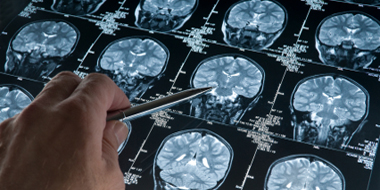
For concussion, I believe this is also the case. There’s ongoing debate about the female concussion “controversy” – whether gender differences exist and if different treatment options are warranted for females. Some research has looked at neurocognitive testing results.[3] Others have studied whether or not the statement about “reporting it more” is valid. [4] Those are just two examples. Currently, I’m noticing in some research results that primary symptoms for females are headache and sensitivity to light and sound. Those are hallmarks of migraine headaches, which definitely affect women.
For hormones, I’m not seeing much information. If hypopituitarism occurs, it could affect females in different ways in different life phases. Each phase is unique. Yet, from what I’ve ascertained to date, the medical community uses a sweeping hormone-as-cause reference for concussion, but doesn’t zero in on different ages and life phases. This is a tremendous oversight, in my opinion. For example, let’s say for a moment that the pituitary system is disrupted in some manner due to a concussion (which is possible). In girls during puberty, a delay in menarche might affect when a girl becomes fully ovulatory.[5] If hypothyroidism results during pregnancy, it could affect fetal development. [6] Motor vehicle accidents cause a high number of concussions for women of childbearing age. [7] Yet I’ve been noticing that pregnant females are often excluded from studies. It’s not just sports that needs to be reviewed. For females, a first question to ask is “what life phase” when it comes to hormones and concussion.
Millions upon millions upon millions of dollars are being spent on studies for youth sports. Which means, for the most part, males. Don’t assume when you hear “youth sports” that it always includes females. Here’s one example. In an interview I had with Dr. Melissa Schiff of the University of Washington regarding the study on middle-school girls soccer players, she made this observation.
“Many of the studies of concussion have been done for football players because they probably have the highest risk of any of the sports. And, since girls are not playing football then it’s hard to find information on females. That’s why we looked at soccer.” Dr. Melissa Schiff [8]
Researchers shouldn’t just run concussion studies on males, subtract the “pesky hormones” factor and blindly apply information gleaned to females. It’s necessary to study the impact on hormones due to concussion. Much is at stake. Perhaps we’ll find definitive evidence that reproductive cycles are impacted during puberty and through childbearing age. In my advocacy work, I’ve heard from parents that their daughters are experiencing worrisome changes and disruptions in their menstrual cycles following concussion. They’re unable to get answers from the medical community, and have turned to me for information. The University of Rochester study found that menstrual cycles do impact concussion, that progesterone levels drop following injury. [9] In pregnancy, progesterone levels remain high. What happens if a pregnant woman is in a motor vehicle accident and sustains a rapid drop in progesterone? How might that affect the pregnancy and fetal development?
While focusing on male youth sports, researchers may be missing a major point. If reproduction or fertility in females are affected due to concussion, might there be an impact on the number of children that may ultimately fuel the pipeline into youth sports and beyond?
Do we know?
Study females and concussion. Use female animals in research. Study those “pesky hormones” and find out what the real impact is to females due to concussion at every life phase. Identify the gender differences. As Dr. Taylor and Dr. Cahill inferred in the segment, it could ultimately help both genders. At this point, without female-specific research, everyone loses.
Updated: November 22, 2015. Removed video links. To see the segment transcript and videos, see the link in footnote [1] below.
[1] Lesley Stahl “Sex matters: Drugs can affect sexes differently” 60 Minutes cbs.com May 25, 2014
[2] “FDA Drug Safety Communication: FDA approves new label changes and dosing for zolpidem products and a recommendation to avoid driving the day after using Ambien CR” fda.gov January 10, 2013
[3] Zuckerman S., Forbes J., Solomon G., Haase R., Sills, A., Lovell, M. (2012). “Response to acute concussive injury in soccer players: Is gender a modifying factor?“ Journal of Neurosurgery: Pediatrics. 10, 504-510. PMID: 23030348.
[4] R. W. Dick “Is there a gender difference in concussion incidence and outcomes?” British Journal of Sports Medicine bjsm.bmj.com 2009;43
[5] Julie Norris “Menstrual Cycles: Puberty and Mid-Adolescence” herconcussion.com March 13, 2014
[6] Julie Norris “Menstrual Cycles: Late Adolescent and Childbearing Years” herconcussion.com March 13, 2014
[7] Bazarian J, Blyth B, Mookerjee S, He H, McDermott M “Sex Differences in Outcome after Mild Traumatic Brain Injury” Journal of Neurotrauma 27:527-539 (March 2010)
[8] Julie Norris “Study Review and Interview: Dr. Melissa Schiff, UW Middle-School Girls Soccer Players and Concussion Study” herconcussion.com April 17, 2014
[9] Wunderle K, Hoeger K, Wasserman E, Bazarian J “Menstrual Phase as Predictor of Outcome After Mild Traumatic Brain Injury in Women” Journal of Head Trauma Rehabilitation